From Data to Policy: How AI is Transforming Library Analytics
🚀 From Data to Policy: How AI is Transforming Library Analytics
From raw indicators to actionable insights — a new era of Library Policy Intelligence is emerging.
In many modern library systems, we are no longer facing a data scarcity problem.
We already have indicators, dashboards, and reports.
Yet the real challenge remains:
👉 How do we turn numbers into meaningful policy insights?
This question became the starting point of our recent experiment, where we explored how Large Language Models (LLMs) can assist in interpreting library analytics data — specifically IPLM indicators.
---
📊 What We Did
We benchmarked four AI models:
- deepseek-v3-2
- seed-2-0-mini
- gemini-2.0-flash
- GPT-4o-mini
Each model was tasked with:
- Interpreting IPLM indicators
- Generating policy recommendations
We evaluated them using:
- Automated rubric scoring
- LLM-as-Judge evaluation
- Side-by-side qualitative comparison
---
🧠 Key Insight #1: AI Can Interpret Policy Data — But Not Equally
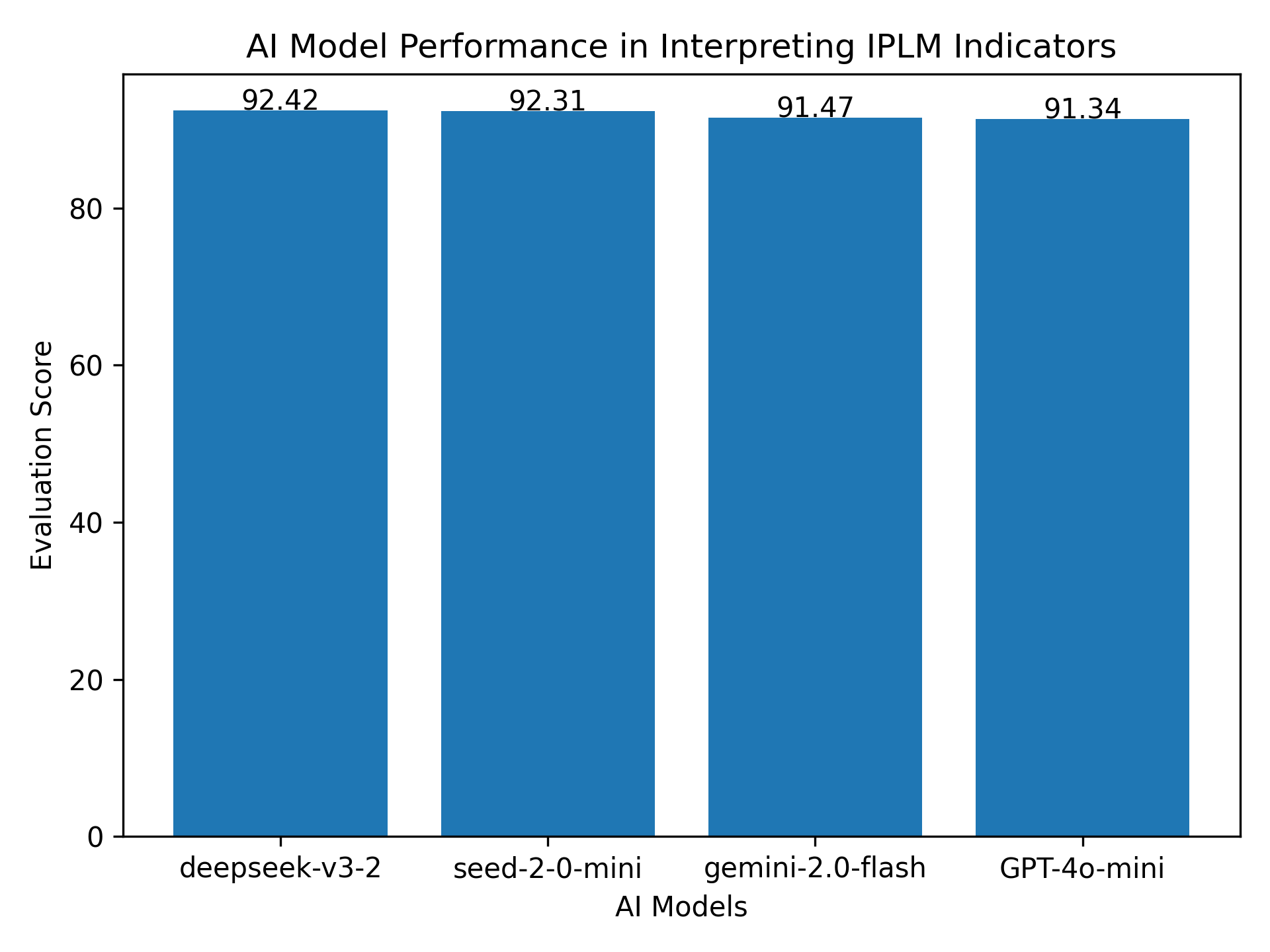
All models performed surprisingly well, scoring above 91/100.
However, one model stood out:
🥇 deepseek-v3-2 — best analytical depth and highest overall performance
This finding is important. It shows that AI is no longer limited to summarizing text — it is capable of structured policy interpretation.
---
⚡ Key Insight #2: Speed vs Analytical Depth Trade-off
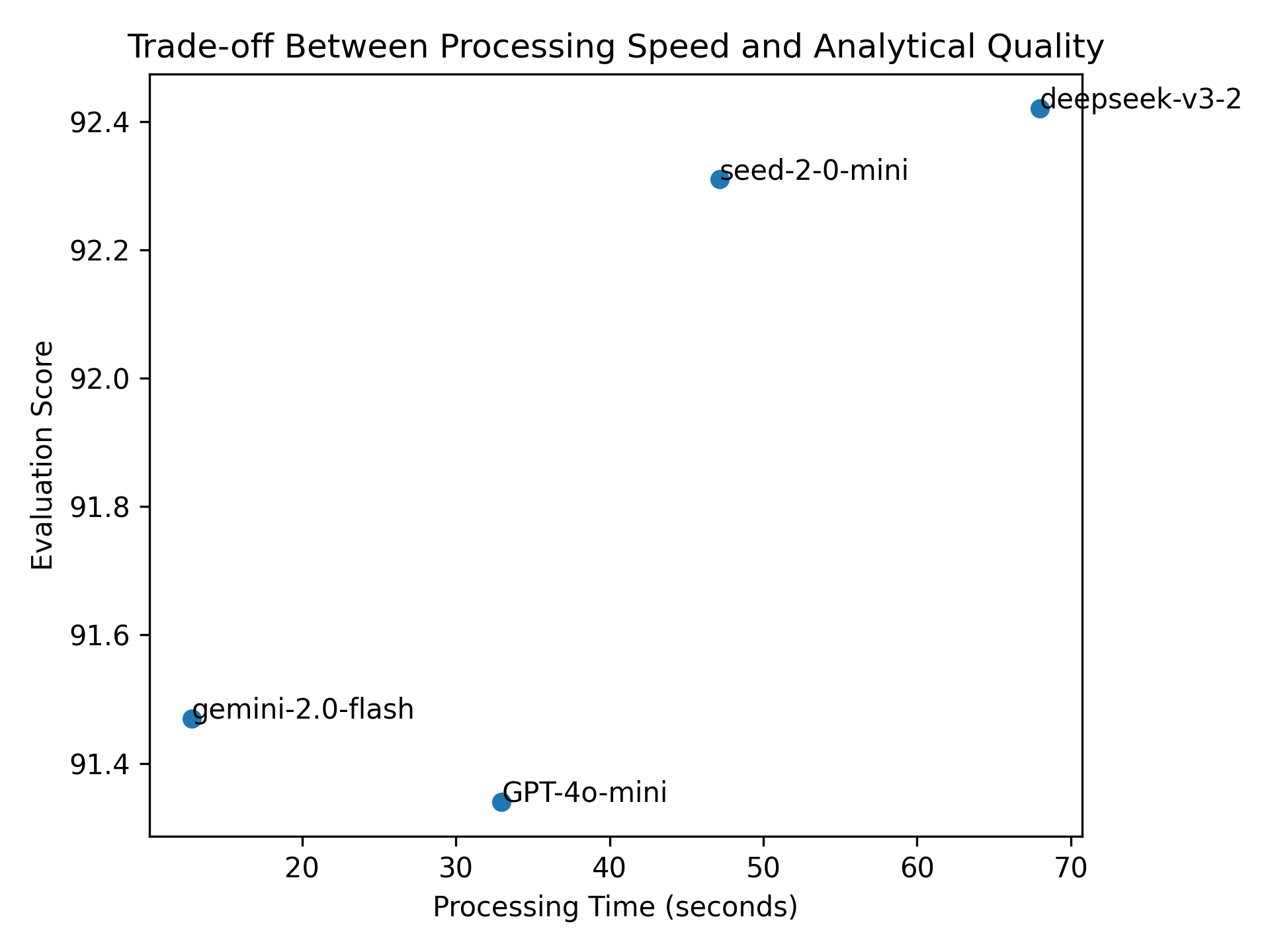
Our results revealed a clear pattern:
- 🚀 gemini-2.0-flash → fastest (~13 seconds), but shallower insights
- 🧠 deepseek-v3-2 → slowest (~68 seconds), but deepest analysis
- ⚖️ seed-2-0-mini → best balance between speed and quality
👉 Faster AI does not always mean better policy insight.
---
🧩 Key Insight #3: What Defines High-Quality AI Analysis?
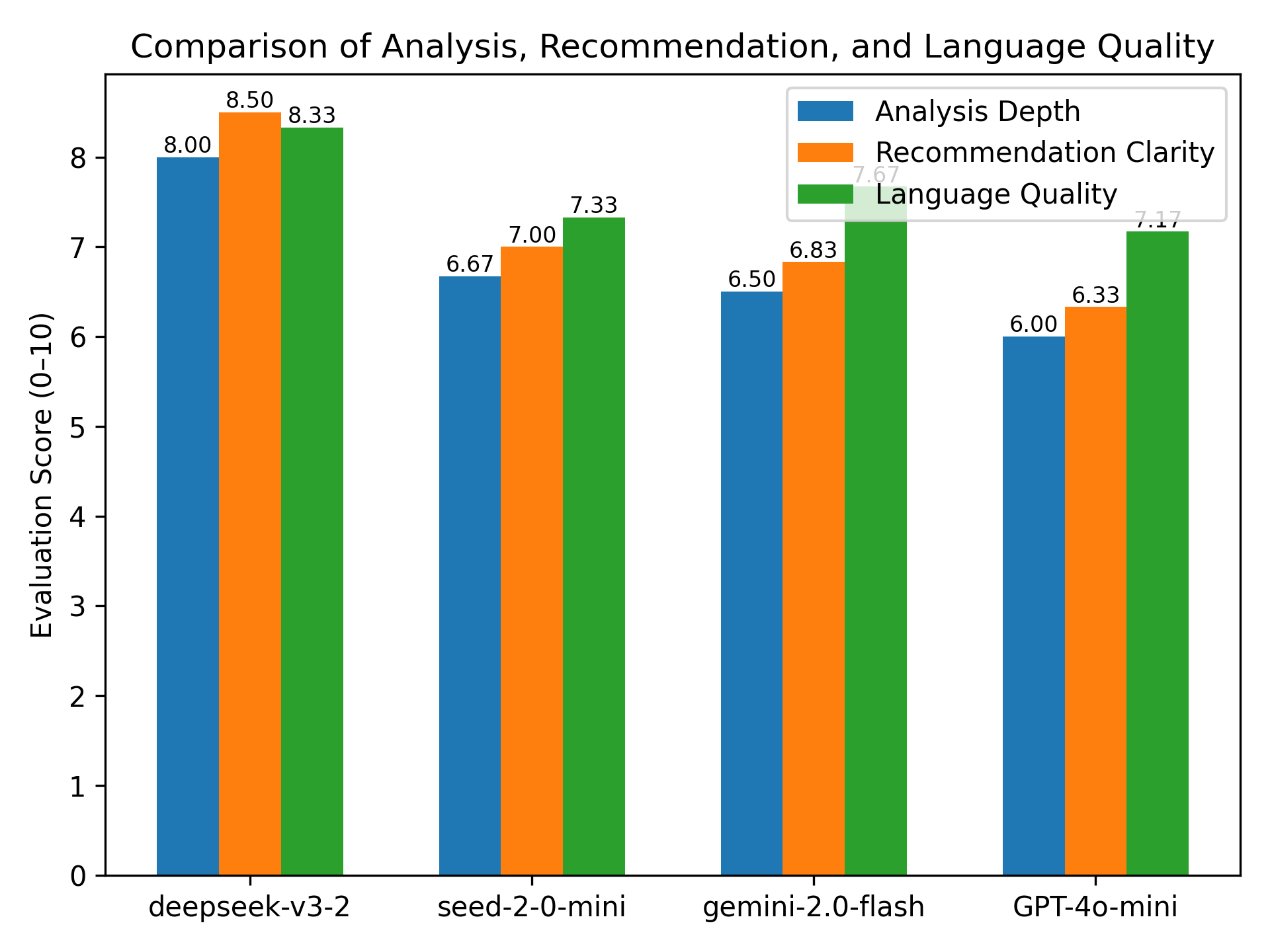
We evaluated models across three dimensions:
- 📊 Analysis Depth
- 🧭 Recommendation Clarity
- ✍️ Language Quality
The best-performing models were not just “accurate.”
They were:
- Structured
- Context-aware
- Actionable
---
📈 LLM-as-Judge Evaluation

The LLM-as-Judge evaluation further confirmed the ranking consistency across models, reinforcing the robustness of the findings.
---
🔮 What This Means for Libraries
We are entering a new phase in library analytics:
👉 From data reporting → to automated policy intelligence
Imagine a system where:
- Library indicators are automatically interpreted
- Weaknesses are diagnosed instantly
- Policy recommendations are generated in seconds
This is no longer a future vision — it is already possible today.
---
🧠 A New Paradigm: Library Policy Intelligence
This research introduces a new concept:
👉 Library Policy Intelligence Systems
Where AI becomes:
- a policy analyst
- a decision-support tool
- a bridge between data and action
---
💬 Final Thought
The question is no longer:
“Can AI analyze library data?”
The real question is:
👉 How do we design AI systems that produce insights we can trust?
We would love to hear your perspective:
Would you prioritize accuracy or speed in AI-driven policy analysis?